Duration: 1 Year
Process: Concept to Mass Production
Brand: WOOTING
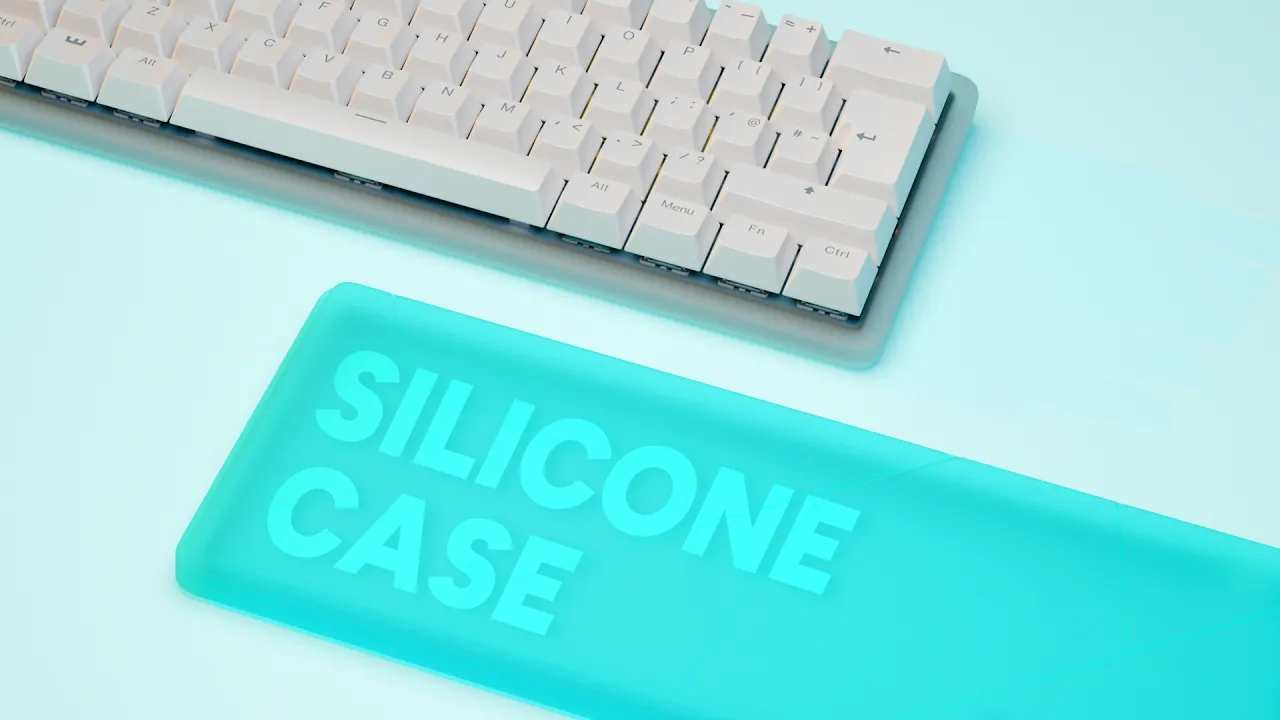
Wooting first planned to develop a silicone case for its keyboards a long long time ago. Back then, although prototypes were created, the initial results did not meet expectations, and the project was placed on hold. In 2025, the project was restarted, and I took full responsibility for the entire product lifecycle from the inside out.
Concurrently, due to trade tensions between the USA and China in 2025, we began exploring alternative manufacturing locations. Taiwan was our top choice due to its robust and comprehensive supply chain ecosystem outside of China.
My role in this project expanded to cover end-to-end development. Beyond standard product design, I was responsible for sourcing new vendors in Taiwan, managing RFQs, conducting factory audits, DFM reviews, evaluating tooling samples, establishing REL testing standards, and ultimately driving the product through to successful mass production.


New Low: A low-profile keyboard with 4 mm travel switches.
The Silicone Case is a low-profile, minimalist shell featuring a flat 4° typing angle for enhanced ergonomics and desk comfort.


Product Video
Me talking about the entire development process on livestream
The process
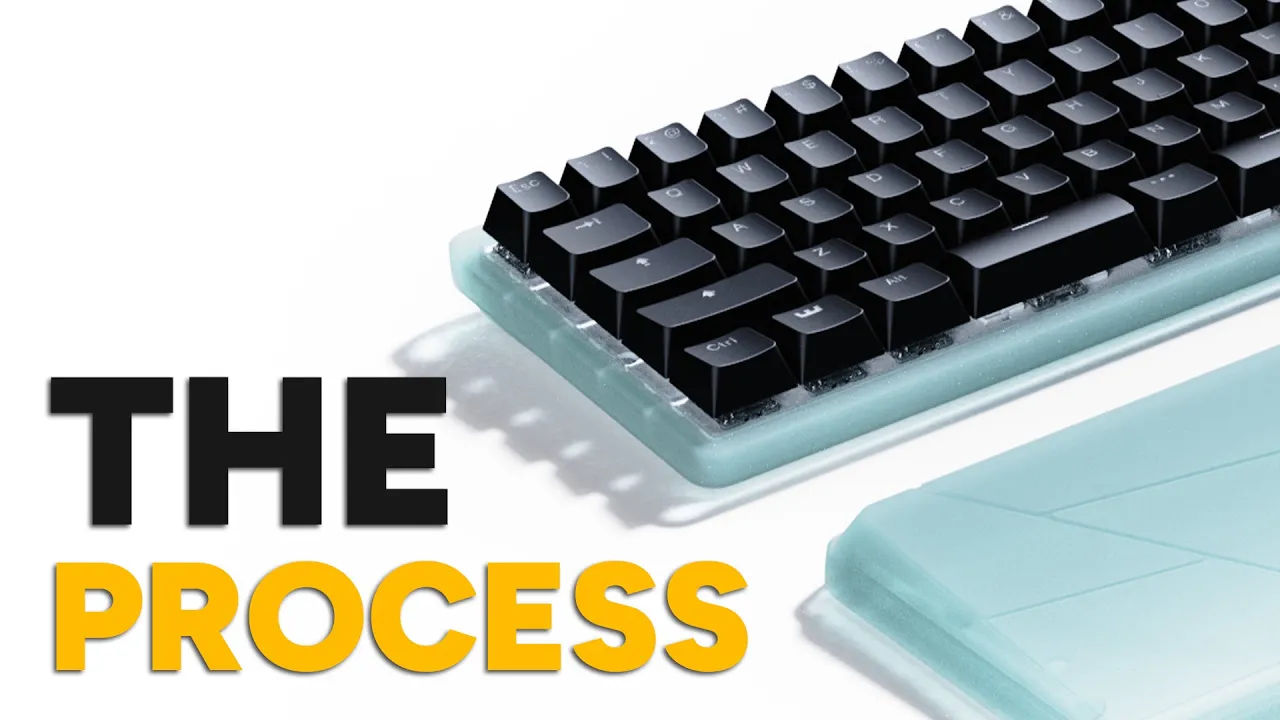
Wooting first planned to develop a silicone case for its keyboards a long long time ago. Back then, although prototypes were created, the initial results did not meet expectations, and the project was placed on hold. In 2025, the project was restarted, and I took full responsibility for the entire product lifecycle from the inside out.
Concurrently, due to trade tensions between the USA and China in 2025, we began exploring alternative manufacturing locations. Taiwan was our top choice due to its robust and comprehensive supply chain ecosystem outside of China.
Product timeline

What it looks like a long long time ago…

The evolution after rebooting the project
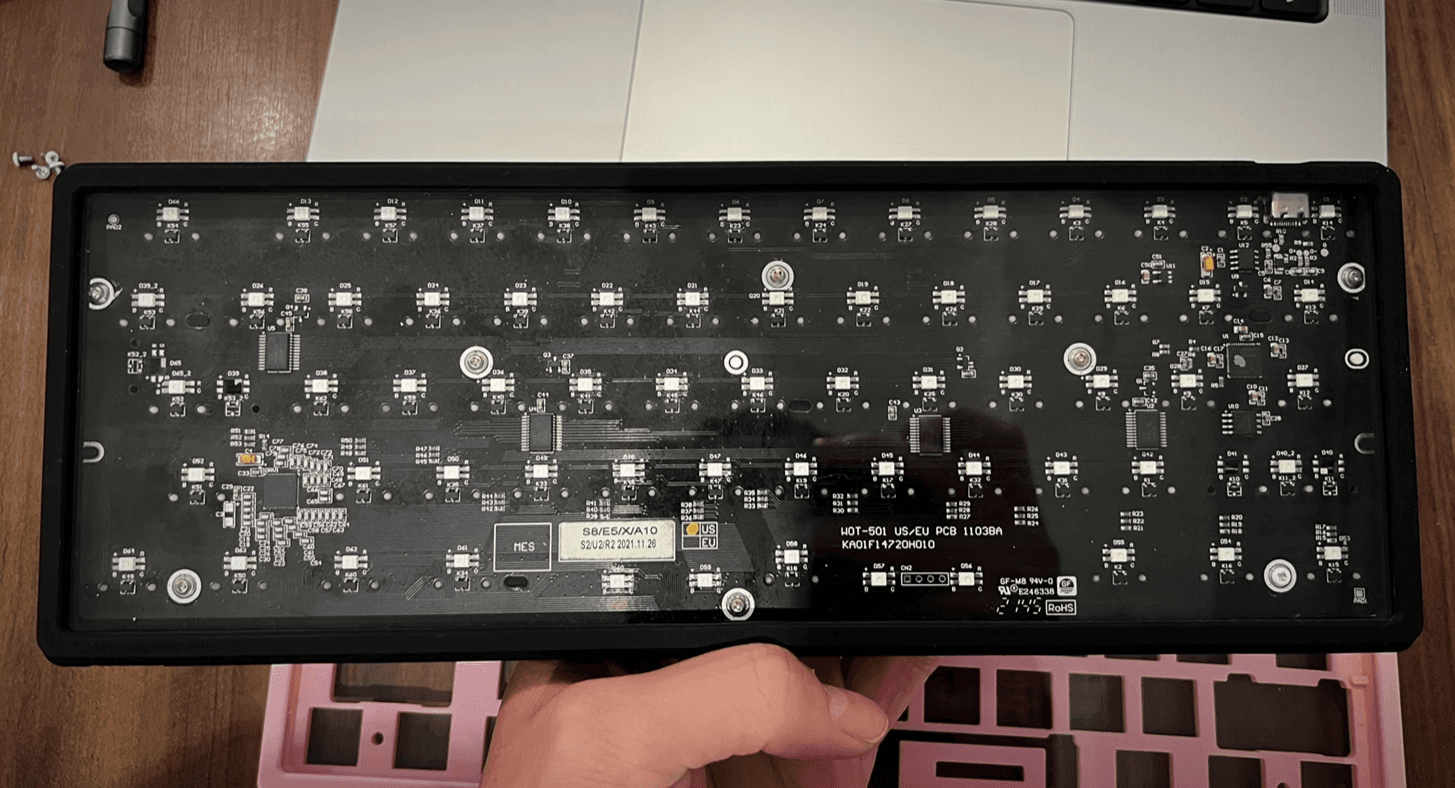
When rebooting the project, we started with the idea of increasing the value of our standalone keyboard module by creating a solution that allows users to use it right out of the box, even without a keyboard case.
We first tried adding silicone feet under the module, but the user experience wasn't good enough. We then moved to a "case-like" design with an open bottom, but our EE team identified potential ESD risks to the PCB. As a result, we shifted to a full-case design. Since this approach would significantly increase the module's MSRP, we decided to make the case a standalone product instead.

Pattern design
The silicone case features a specially designed pattern at the bottom that enhances its overall appearance.
I created three different pattern proposals and had the entire company vote on them. In the end, Pattern A was selected as the winner.

1st Prototype
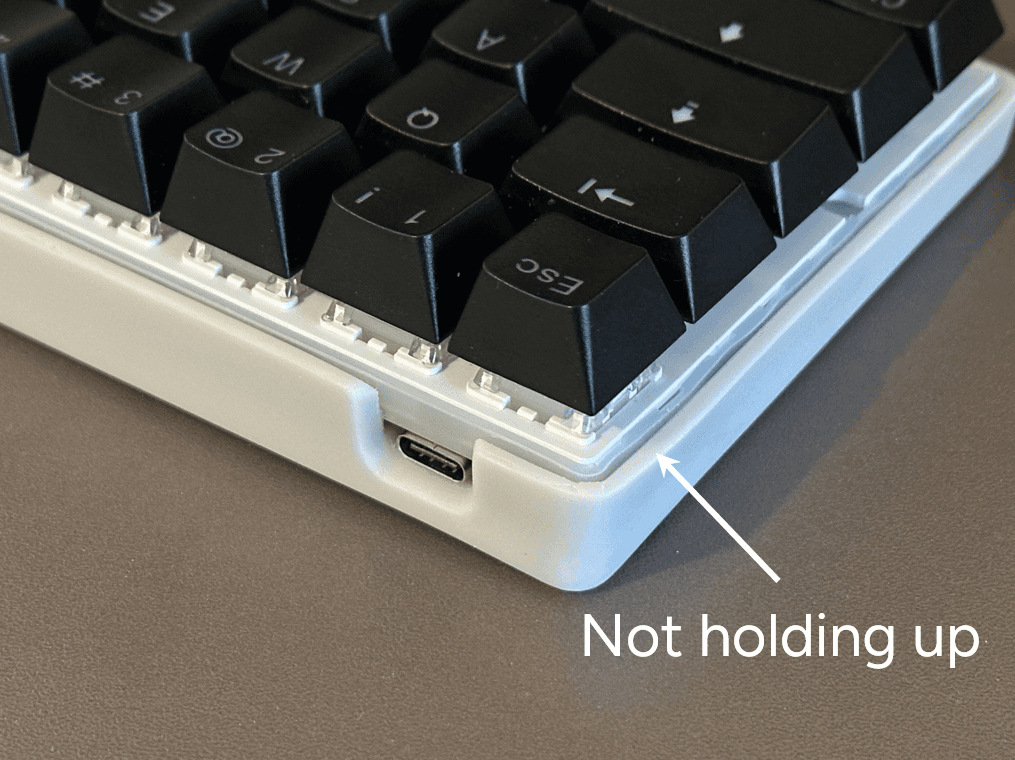
We made a 50A TPU mockup to see how the structure would work with the keyboard module. Well... it didn't turn out great. The internal structure didn't support the module very well, and the case also experienced significant deformation.
But hey! Rome wasn't built in a day. I just had to keep improving until I got it right.


2nd Prototype
By adding lips that wrap around the entire keyboard module and refining the interference features on the inner surface of the case, the module is held securely in place. No matter how hard I shake the keyboard—or even flip it upside down—the case keeps the keyboard module safe and secure.


3rd Prototype with Soft tooling
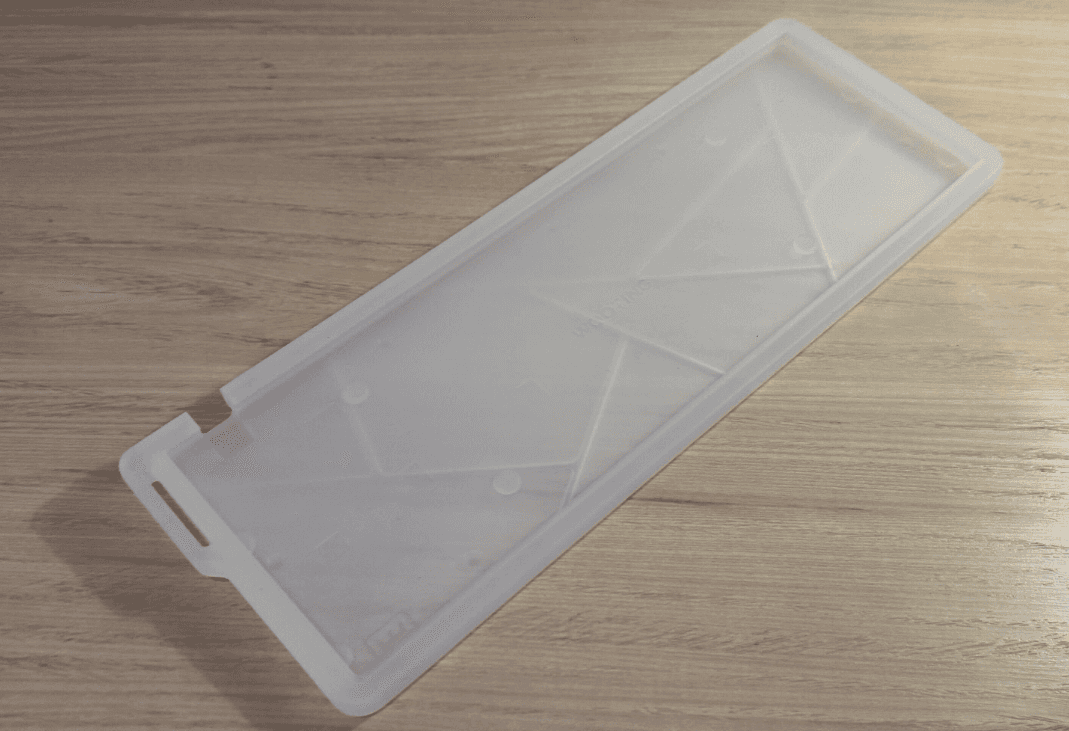
Once we were confident that the structural design worked, we continued refining the appearance of the case and opened a soft tool using production-grade silicone to run further tests, including material translucency, REL testing, surface texture, and overall feel.
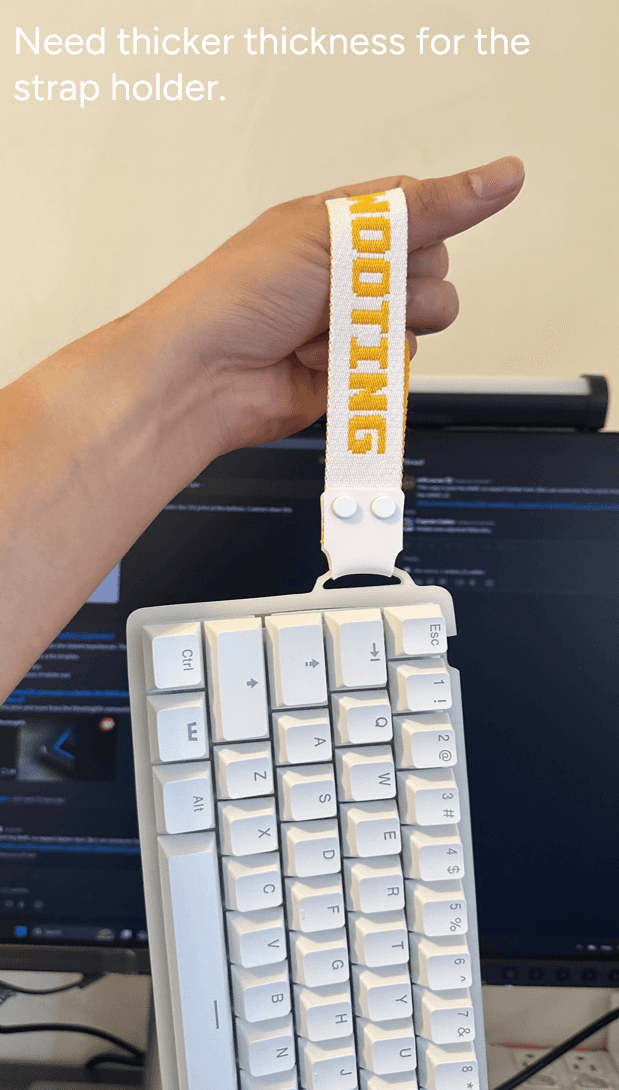
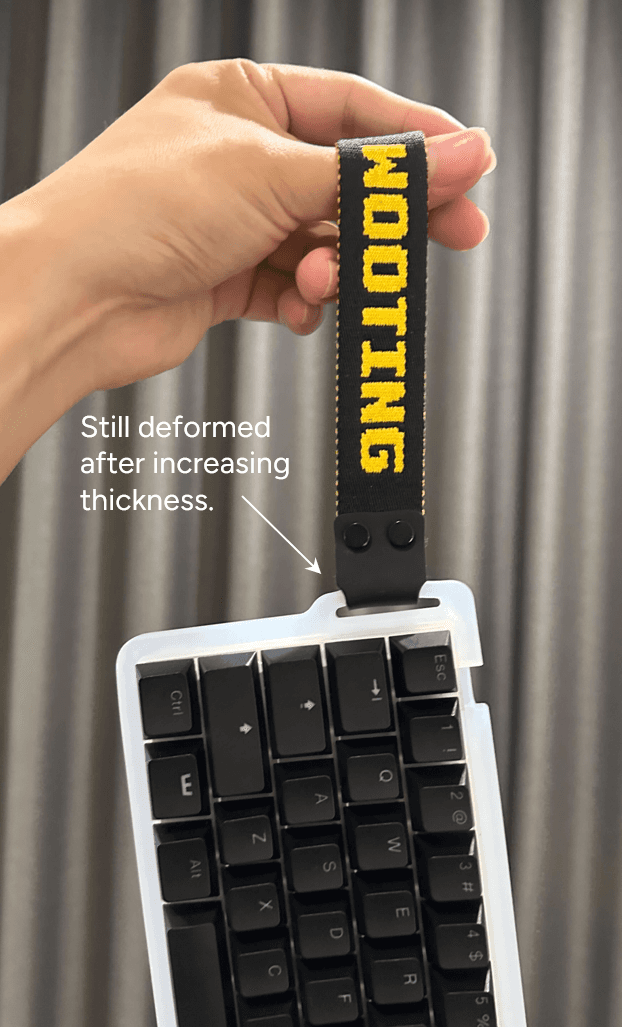
Even though the thickness of the strap holder was increased in the soft tooling design, it still deformed significantly under the weight of the keyboard, introducing unnecessary uncertainty to the product. As a result, we decided to remove it from the design.
Colorways sampling

REL tests
To ensure the highest quality, we conducted all the necessary validation tests for silicone, including temperature cycling, alcohol resistance, and UV exposure tests.


Drop test
To evaluate how well the silicone case protects the keyboard module, we conducted drop tests from every angle.

Wisarut Aroonkayan │ Yuh Shyan Lin
Email: Wisteinlin@gmail.com
Cel: +886 953-663-906
©2026 Wisarut Lin. All right reserved.